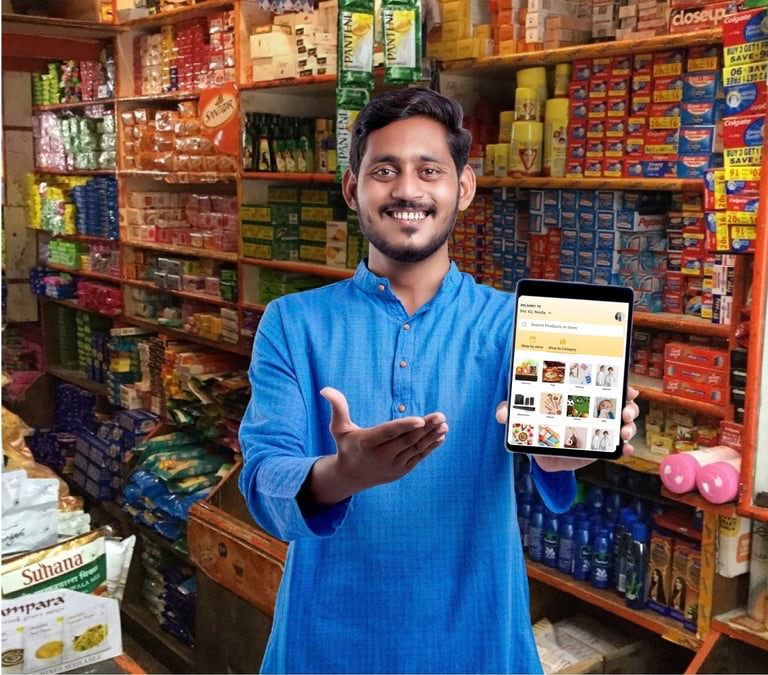
How Local Businesses Across India Are Going Digital with chotu – and Why Yours Should Too
There’s a chai tapri near my office that makes the best cutting chai in the city. The owner, Raju bhai, has been brewing the same perfect cup for 15 years. But until six months ago, you had to know about him. You had to walk past, smell the chai, and take a chance. New customers rarely found him.
Today? He gets 40+ orders before 9 AM from nearby offices – all through chotu.
If you run a local business – whether it’s a sweet shop, a mutton center, a salon, or a flour mill – this story is about you.
The Painful Truth About Running a Local Business Today
You open your shutters every morning. You’ve built your craft over years, maybe decades. Your regulars love you. But outside your immediate neighbourhood, nobody knows you exist.
Meanwhile, large chains and aggregator apps are capturing customers that could be yours. Customers who would prefer a local, trusted, familiar face – if only they could find you.
The problem isn’t your product. The problem is visibility and convenience.
And that’s exactly what chotu solves.
What Is chotu?
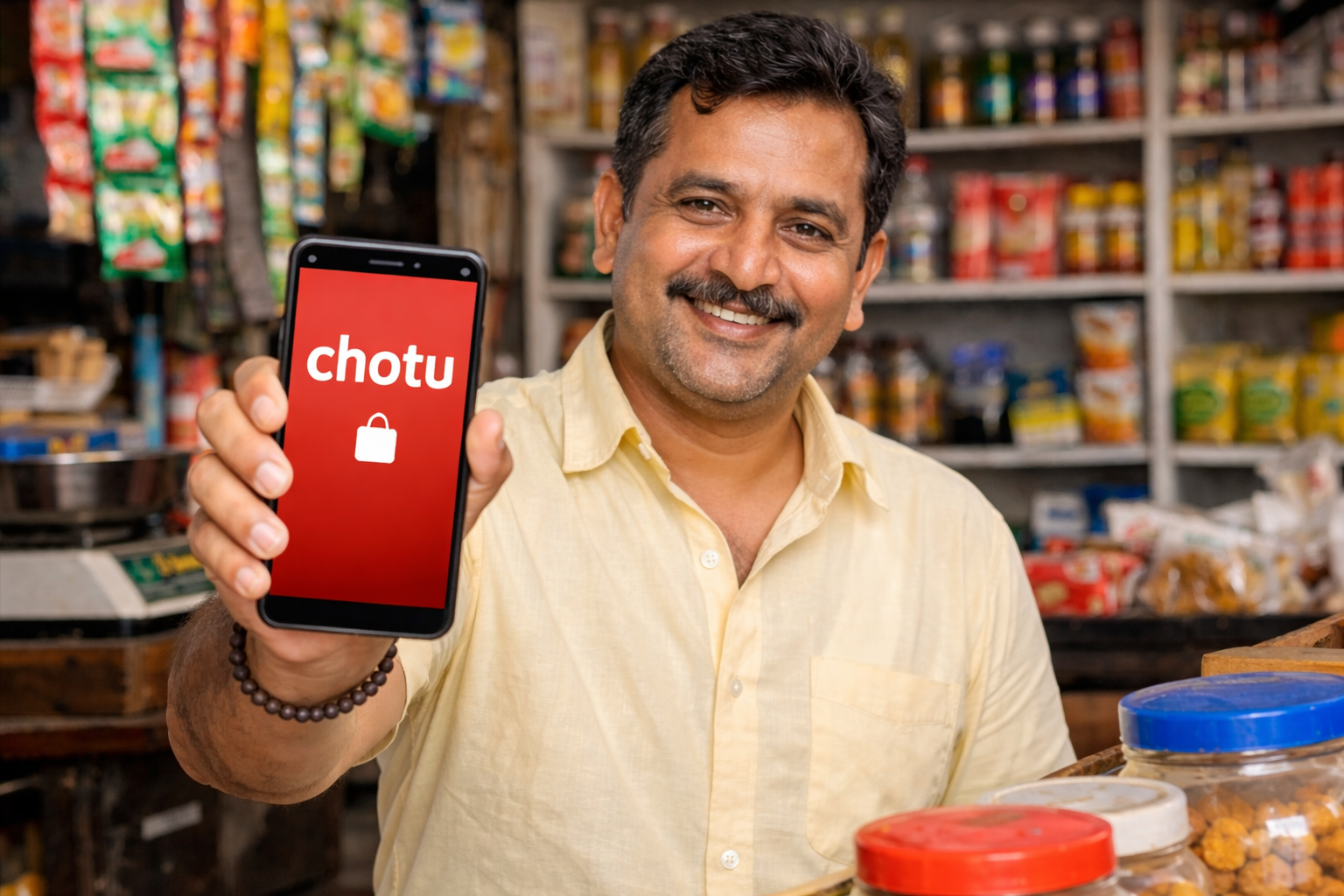
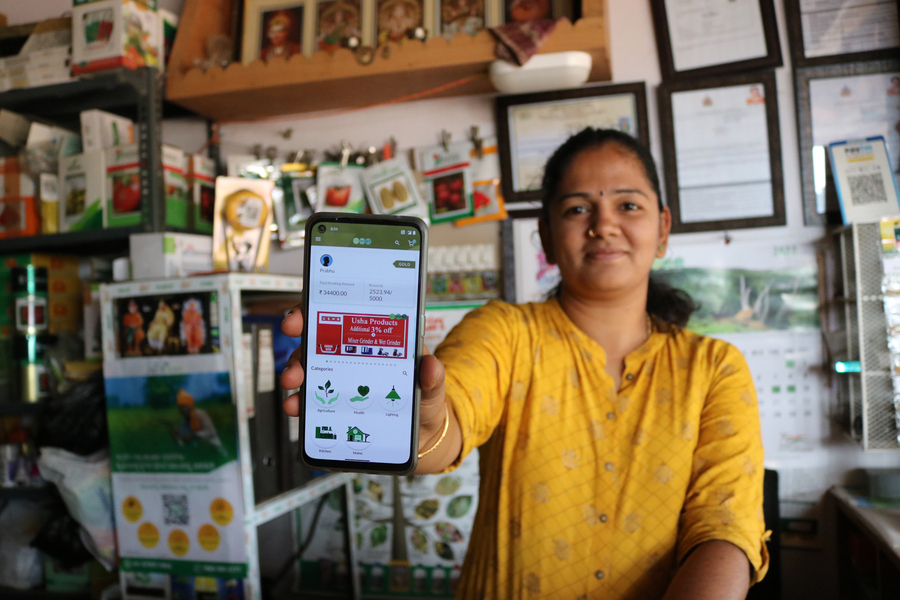
chotu is a digital platform built specifically for local Indian businesses – the kind that form the backbone of every mohalla, bazaar, and colony across the country.
It’s not complicated. It’s not expensive. And you don’t need to be tech-savvy to use it.
With chotu, you get:
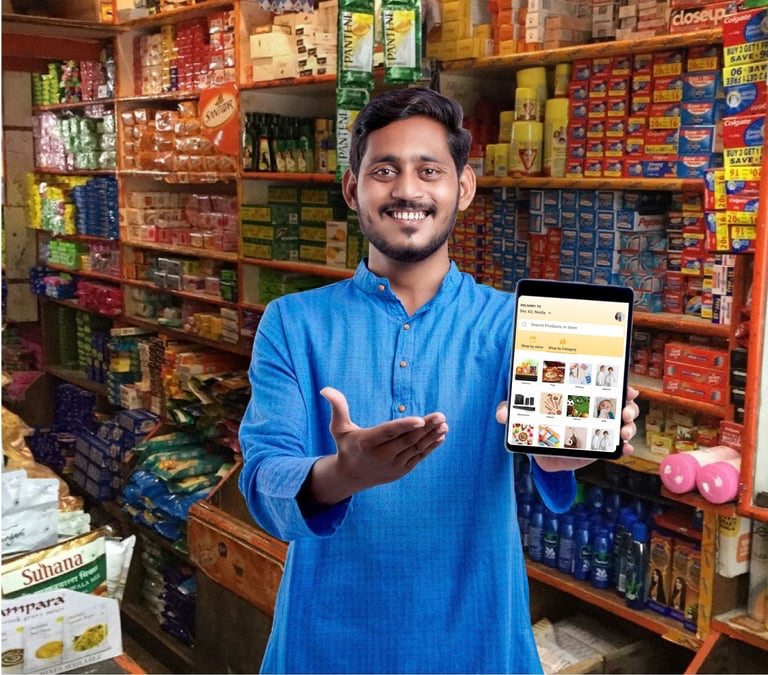
Your own digital storefront with your menu, catalogue, or service list
The ability to accept orders via WhatsApp
A loyalty and repeat-customer system that keeps people coming back
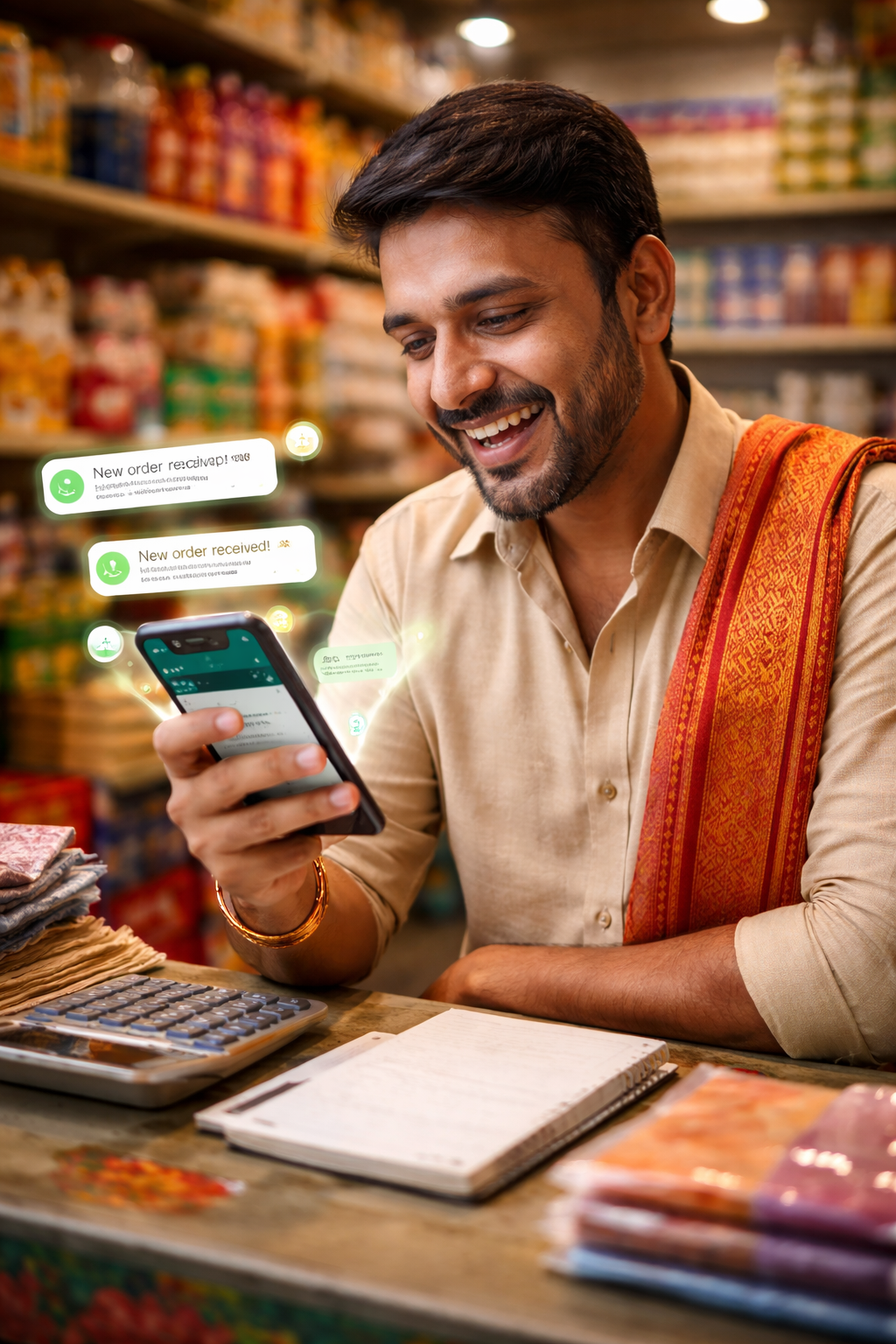
Real-time order notifications so you never miss a sale
Simple payments – UPI, cash on delivery
Think of it as a digital extension of your shop counter – available 24/7, even when you’re asleep.
Why Every Type of Local Business Needs to Go Digital Right Now
Let’s talk specifically about your business. Because the reasons are different – and equally compelling – no matter what you sell.
You make food people crave. But if you’re not on a digital platform, you’re losing the dinner rush – because people search online before they step outside. With chotu, your menu is discoverable, your orders come in organized, and your kitchen runs smoother. No more scribbled chits. No more missed calls.
Mutton Shops, Chicken Centers & Fish Shops
Your customers want fresh, and they want it delivered or ready for pickup at a specific time. chotu lets them pre-order in the morning and pick up on their way home – which means more planned purchases, larger order sizes, and less wastage for you.
Salons & Beauty Parlours
A salon lives and dies on appointments. With chotu, your customers book slots themselves – no back-and-forth calls, no double bookings, no no-shows (because automated reminders do the work for you). You show up to a full schedule, every day.
Dry Cleaners & Tailors
Your customers want to drop off and pick up on their schedule. chotu gives them a simple way to book, track status, and get notified when their clothes are ready. For tailors, you can even collect measurements digitally and manage delivery timelines – no more frantic “aur kitna time lagega” calls.
Kirana Stores & Grocery Shops
The neighborhood kirana store is one of India’s greatest institutions. But kiranas that have gone digital are seeing 30–40% more revenue from the same customer base. Why? Because when a customer can send their list via WhatsApp and get doorstep delivery, they shop more, not less. chotu makes this possible without needing an IT department.
Organic Shops, Ayurvedic Shops & Nutritionists
Your customers are health-conscious and research-driven. They want to know what they’re buying, where it comes from, and why it’s good for them. A chotu storefront lets you tell that story – with product descriptions, certifications, and even health tips – turning browsers into buyers.
Dental Clinics & Health Services
Healthcare is personal, and trust is everything. chotu helps dental clinics and health practitioners manage appointments, send reminders, and collect feedback – building the kind of ongoing relationship that keeps patients coming back and referring others.
Bakeries & Sweet Shops
Festivals, birthdays, weddings – your biggest orders are occasion-driven. With chotu, customers can place custom orders in advance, pay a deposit, and you can plan production without the last-minute chaos. Your bestselling items can even show “only 5 left” alerts to create urgency.
Florists & Gift Shops
Nobody buys flowers or gifts casually anymore – it’s always for an occasion, and they plan it. chotu lets your customers browse your catalogue, order custom arrangements, schedule delivery, and pay in advance. You get organized orders; they get the perfect gift, on time.
Pet Shops & Pest Control Services
For service businesses, chotu is a scheduling and trust-building engine. Your customers want to know you’re professional, available, and reliable. A clean digital presence on chotu communicates exactly that – before you’ve even said a word.
Rice Traders, Dry Fruit Shops, Flour Mills & Dairy Parlours
Bulk and staple purchases are habitual – meaning your best customer is one who reorders regularly. chotu’s repeat-order feature makes it trivially easy for customers to reorder the same 5 kg atta or 10 kg basmati with a single tap. Turn a one-time buyer into a monthly subscription.
Fast Food, Chat Bhandars & Hot Chips
Speed is your product. chotu’s quick-order flow is designed for impulse purchases – customers can order in under 60 seconds, pay via UPI, and show up right when it’s ready. Shorter queues, happier customers, more tables turning.
Stationery Shops & Sports Stores
Back-to-school season, exam time, sports day – your peak periods are predictable. Use chotu to run timely promotions, push notifications to loyal customers, and manage bulk school/college orders digitally. Turn seasonal rushes into smooth, profitable operations.
Pan Shops, Pickle Shops & Home Foods
If you’ve ever thought “my product is too small to sell online” – think again. Pan shops with chotu are taking advance orders for corporate gifting. Home food businesses are building waiting lists. Pickle shops are shipping across cities. The digital shelf has no size limit.
Medical Shops & Loan Services
Trust and accessibility are everything in financial and medical services. chotu gives you a credible, professional online presence where customers can inquire, upload prescriptions, or check eligibility – all without waiting in a queue.
Catering Services, Carpenters & Home Services
For project-based and event-based businesses, chotu is a lead generation and management tool. Customers describe their needs, you send a quote, they confirm – all in one place. No lost chats, no forgotten enquiries.
⭐ Astrologers & Vastu Consultants
Consultation businesses depend on trust and word-of-mouth. chotu amplifies that word-of-mouth with reviews, ratings, and a professional profile that lets new customers find you and book sessions with confidence.
What Changes When You Go Digital with chotu
The difference is not just in numbers – though the numbers are real. Businesses on chotu report:
2x more repeat customers within the first 3 months
35% increase in average order value due to easy upsells and combos
60% reduction in missed orders because everything is tracked digitally
More free time because orders manage themselves instead of tying up your phone
But beyond the numbers, something more important changes: you stop depending on who walks past your door. You start building a business, not just a shop.
“But I’m Not Tech-Savvy”
That’s the beauty of chotu. It was built for Raju bhai, not for a tech startup founder.
Setup takes under 30 minutes. The chotu team helps you get your menu or catalogue online. Your customers already know how to order on WhatsApp and pay via UPI – chotu just connects the dots.
You don’t need a website. You don’t need to hire anyone. You just need your phone and your product.
The Businesses That Wait Will Regret It
In every market, in every city, in every colony – the early movers win. The kirana that went digital first is now the neighborhood’s go-to delivery store. The salon that put itself on chotu has a 2-week booking waitlist. The biryani center that set up online ordering is catering corporate lunches it never could have reached before.
The window to be the first in your area is still open. But it won’t stay open forever.
Get Started with chotu Today
Whether you’re a one-person pan shop or a catering business serving 500 plates a day, chotu has a plan that fits your size and budget.
Join thousands of local businesses already growing with chotu.
You’ve set up your digital store. Now what? Here’s exactly how to go from zero to 100 real, paying customers – step by step.
Getting online is the easy part. The harder question every local business owner faces is: “How do I actually get customers to order from me?”
The good news? You don’t need a marketing budget. You don’t need a social media team. You don’t even need to be good at technology. You just need a plan – and the willingness to execute it, one step at a time.
This guide will take you from 0 to your first 100 online customers. Let’s get into it.
Before You Begin: Set Your Foundation Right
Before you chase a single customer, make sure these three things are in place. Skipping them is the most common reason businesses get online traffic but zero orders.
1. Your profile must be complete. Upload clear photos of your products or shop. Write a short description that tells people what you sell, where you are, and what makes you special. An incomplete storefront kills trust before it starts.
2. Your menu or catalogue must be accurate and priced. Nothing frustrates a customer more than ordering something and being told “woh available nahi hai.” Only list what you actually have. Keep prices updated.
3. You must be responsive. When your first orders come in, respond fast. In the early days, every single customer interaction is your reputation. A 5-minute response time builds loyalty. A 5-hour response time loses it forever.
Once these are in place, you’re ready to go.
Step 1: Start With the People Who Already Trust You (Days 1–3)
Your fastest path to your first 20–30 customers is not strangers on the internet. It’s the people who already love what you do.
Tell your regulars first. The next time a loyal customer walks in, show them your chotu page on your phone. Say: “Ab aap ghar se bhi order kar sakte ho.” That’s it. No hard sell. Most regulars will be genuinely excited and will try it within days.
Send a WhatsApp broadcast to your contacts. Go through your phone contacts and make a list of everyone who has ever bought from you – family, friends, old customers, neighbours. Send them a simple voice note or message:
“Hum ab online hain! Ab ghar baithe order karo aur we’ll deliver / ready rakhenge. Link ye raha: [your chotu link]. Pehle 10 orders pe special discount bhi hai!”
Ask your family and close friends to place the first orders. Real orders – even from people you know – build your order history, your reviews, and your confidence. Don’t be shy about asking. A sweet shop owner in Pune got his first 15 orders this way in a single day.
Step 2: Put Your Link Everywhere (Days 3–7)
Once you’re online, your chotu link is your most valuable asset. Every single place a customer can see it is a potential order. Make it impossible to miss.
Print it on your packaging. Add a small sticker or rubber stamp with your chotu link and a message like “Order karo ghar se!” to every parcel, bag, or box that leaves your shop. Every customer who takes your product home becomes a potential repeat online customer.
Write it on your shop shutter or board. A simple hand-painted or printed sign outside your shop – “Ab online order karein: chotu.in/yourshop” – catches people who walk past but don’t always have time to stop.
Add it to your WhatsApp Business profile. Go to your WhatsApp Business settings and add your chotu link in the bio section. Anyone who messages you for any reason will see it instantly.
Put it on your Google Business Profile. If you have a Google listing (and you should – it’s free), add your chotu link as your website. This brings in customers searching Google Maps for businesses like yours.
Step 3: Run One Simple Launch Offer (Week 1–2)
Offers are not about giving away money. They’re about removing the hesitation a new customer feels before placing their first order. Once they order once and have a good experience, they’ll order again – without any offer.
The best first offer is a first-order discount. Something like “Pehli online order pe 10% off” or “Free delivery on your first order” is enough to push a curious person into becoming a paying customer.
Keep the offer time-limited.“Only this week” creates urgency. “Whenever you feel like it” creates procrastination. Tell your customers the offer ends Sunday.
Announce it on your WhatsApp status every day during the offer period. WhatsApp status is the most underrated marketing tool for local businesses. Your contacts see it passively while scrolling, and it keeps your offer top of mind without feeling pushy.
Step 4: Use Your Happy Customers as Marketers (Week 2–3)
Word of mouth built your offline business. It works online too – you just have to make it happen intentionally.
Ask every happy customer for a review. After a successful order, send a simple message: “Aapka order mil gaya? Agar experience achha laga toh ek chota sa review denge? Bahut help hoga.” Most people are happy to leave a review if you ask nicely and immediately after a good experience. Five genuine reviews on your chotu profile make you look dramatically more trustworthy to new customers.
Create a referral incentive. Tell your customers: “Agar aap apne kisi dost ko refer karo aur woh pehli baar order kare, toh tumhare agli order pe ₹20 off milega.” You don’t need a fancy system – you can track this manually in the early days. Referrals from happy customers convert at 4x the rate of cold advertising.
Share customer photos (with permission). When a customer sends you a photo of your product or tags you, repost it on your WhatsApp status or Instagram. Real photos from real customers are worth more than any marketing banner.
Step 5: Get Into Your Local Community (Week 2–4)
The internet is global, but your customers are local. The most effective digital marketing for a local business is targeted at a 2–5 km radius around your shop.
Join local WhatsApp groups. Every neighbourhood has resident welfare groups, apartment complex groups, and colony groups. Join as many as you can. Don’t spam – introduce yourself once, share your link, and offer to answer any questions. A single message in a 200-person apartment group can generate 15–20 orders.
Post in local Facebook groups. Search for groups like “Residents of [your area]” or “[Your city] Food & Delivery.” These groups are full of people actively looking for local recommendations. A well-written post with a good photo of your product can go far.
Partner with a complementary business nearby. A bakery and a chai shop. A florist and a gift shop. A tailor and a dry cleaner. Find a nearby business that serves the same customers but doesn’t compete with you, and agree to refer each other. “Order your cake here, get chai from my friend next door.” Both businesses win.
Step 6: Post Consistently on WhatsApp Status (Ongoing)
This one step, done consistently, is responsible for more repeat orders than almost anything else. It costs nothing and takes 5 minutes a day.
Post your daily specials or featured item every morning. A photo of the day’s fresh mutton. Today’s biryani. The cake that just came out of the oven. Freshness and availability updates drive impulse orders.
Post behind-the-scenes content. People love seeing how their food is made, how a tailor cuts fabric, or how a florist arranges bouquets. It builds trust and emotional connection. It makes people feel like they know you – and people order from people they know.
Post your customer stories.“A customer ordered our home-style rajma chawal for her husband’s birthday. She said it tasted exactly like her mother’s cooking.” Stories like this are what make someone choose you over a big chain.
Post 3–5 times a week, not 3–5 times a day. Consistency matters more than frequency. One daily WhatsApp status for 30 days will do more for your business than 20 posts in one day and then silence for a week.
Step 7: Track What’s Working and Double Down (Week 3 Onwards)
Once you have 30–40 customers, patterns will emerge. Pay attention to them.
Which items get ordered most? Feature them at the top of your catalogue. Promote them more. Consider bundling them with slower-moving items.
Where are most customers coming from? If WhatsApp referrals are driving orders, spend more time on WhatsApp. If your apartment group post brought 20 orders, post there again next week.
What time of day do most orders come in? Make sure you’re fully stocked and responsive during those peak windows.
Which customers order more than once? Identify your repeat buyers and treat them specially – a thank-you message, a small freebie, an early heads-up on new items. A customer who orders twice is 5x more likely to order a third time.
The 100-Customer Milestone: What to Expect
If you follow these steps, here’s roughly how the journey looks:
Milestone
Typical Timeline
Key Action That Got You There
First 10 customers
Day 1–3
Telling regulars & WhatsApp broadcast
First 25 customers
Week 1
Launch offer + link everywhere
First 50 customers
Week 2–3
Reviews + community groups
First 100 customers
Week 3–5
Referrals + consistent WhatsApp status
Your timeline may be faster or slower depending on your business type, city, and how consistently you execute. A biryani center in a dense residential area might hit 100 in two weeks. A carpenter or pest control service might take six. Both are completely fine – the steps are the same.
The Most Common Mistakes to Avoid
Going silent after the launch. The biggest mistake is setting up your store, telling people about it once, and then waiting. You need to keep showing up – in your customers’ WhatsApp status views, in their groups, in their messages. Out of sight is out of mind.
Not following up after orders. A simple “Aapka order kaisa laga?” message after every order takes 30 seconds and dramatically increases the chance of a repeat purchase and a good review.
Offering too many discounts for too long. One strong launch offer is great. Perpetual discounting trains customers to never pay full price. Once your launch offer ends, let it end.
Trying to do everything at once. Don’t set up Instagram, Facebook, Google Ads, and WhatsApp all in the same week. Pick one or two channels, do them well, and add more only once you’re consistent.
Waiting for perfection. Your catalogue doesn’t need to be perfect. Your photos don’t need to be professional. Your first 100 customers don’t care about perfection – they care about good product, good service, and convenience. Start now. Improve as you go.
Your Action Plan: The Next 7 Days
If you want to make progress immediately, here’s exactly what to do this week:
Today: Complete your chotu profile – photos, description, full menu with prices.
Tomorrow: Send a WhatsApp broadcast to 50 contacts announcing you’re online. Include your link and a first-order offer.
Day 3: Put your chotu link on your packaging, your shutter board, and your WhatsApp Business bio.
Day 4: Join 3 local WhatsApp or Facebook groups and introduce your business.
Day 5: Ask your first 5 customers for a review.
Day 6: Post your first behind-the-scenes WhatsApp status.
Day 7: Review your first week – how many orders, from where, and what to do more of.
Seven days. That’s all it takes to get your first real momentum going.
Final Word: Your First 100 Customers Are Closer Than You Think
Every business that’s crushing it online today was once exactly where you are – zero orders, wondering if this digital thing would actually work for them.
The difference between businesses that made it and those that didn’t wasn’t talent, budget, or luck. It was consistent and follow-through.
Your chai, your biryani, your stitching, your flowers, your dry fruits – they’re good. Your community wants to support you. They just need to know you’re available, convenient, and trustworthy online.
Give them a reason to try once. Give them a great experience. They’ll come back – and they’ll bring their friends.
Your first 100 customers are waiting. Go get them.
Why Customers Don’t Return – And the Simple Fixes That Bring Them Back
Kavitha was Anand’s best customer.
Every Saturday morning, she’d walk into his bakery in Chennai’s Adyar, buy a loaf of brown bread, two croissants, and – on good weeks – a whole pound cake. She’d been doing this for two years. Anand knew her by name. She knew his daughter had started school. It felt less like a transaction and more like a weekly ritual.
Then one Saturday, she didn’t come. Then another. Then a month passed. Then three.
Anand didn’t think much of it at first. Customers come and go. Life gets busy. Maybe she’d moved. Maybe she was dieting.
Eight months later, he ran into her at a traffic light near the bakery. He waved. She waved back, smiled, and drove on.
That evening, Anand lay awake wondering: Why did she stop? Was it something I did? Was it my bread? Did I say something wrong?
He never found out. And that uncertainty – that not-knowing – is the quiet cost every local business pays when a loyal customer disappears without a word.
The Uncomfortable Truth About Customer Churn
Here’s something most business owners don’t want to hear: most of the time, when a loyal customer stops coming, it has nothing to do with your product.
Research on customer behavior tells us that the top reasons people stop buying from a local business are:
They forgot about you. They found a more convenient option. They had one small, unresolved bad experience that they never mentioned. They felt like just another transaction, not a person.
Notice what’s not on that list: bad product. Poor quality. Wrong price. High competition.
The product is almost never the reason. The relationship – or the lack of one – almost always is.
And this is both the hard truth and the hopeful one: because relationships can be built, maintained, and repaired. You have more control over this than you think.
Deepa’s Salon and the Thank-You That Changed Everything
Deepa runs a small beauty parlour in Jaipur’s Vaishali Nagar. She’s good at her work – excellent, in fact. Her customers leave happy. But for years, her regulars would come for four or five sessions and then gradually drift away, replaced by new faces who would eventually drift away too. The door was always revolving.
One afternoon, on a whim, she sent a WhatsApp message to a customer who hadn’t been in for two months: “Hi Sunita ji, just wanted to say it was lovely having you. Hope everything is well with you and the family. Agar kuch chahiye toh bataiye.”
Sunita replied within twenty minutes. “Deepa didi! Main aane wali thi – bas time nahi mila. Kya kal appointment mil sakti hai?”
She came the next day. She brought her sister. Both became regulars.
Deepa has since sent that same simple message – warm, personal, no sales pitch – to dozens of customers who had gone quiet. Her response rate is over 60%. More than half of the customers she reaches out to come back within two weeks.
The message doesn’t sell anything. It doesn’t offer a discount. It just says: I noticed you. You matter here.
That’s all most customers need to hear.
The Moment a Customer Decides Never to Return
Here’s the thing about the moment a customer decides to stop coming: you almost never see it.
It doesn’t happen with a dramatic argument or a formal complaint. It happens quietly, in a small moment that the customer experiences as mildly unpleasant – and then never mentions to you.
Ravi runs a kirana store in Mumbai’s Malad East. He lost one of his best monthly grocery customers – a family that spent ₹4,000–5,000 with him every month – because of a single interaction that took eleven seconds.
The father had asked one of Ravi’s helpers where a particular spice was kept. The helper, distracted, pointed vaguely and said “udhar hai.” The father found it after five minutes of searching. He said nothing. He paid. He left. He never came back.
Did he complain? No. Did he tell Ravi? No. Did he tell his wife? Yes. And his wife decided they’d try the new supermarket that had opened nearby.
Ravi never knew. He noticed the family was gone after two months and assumed they’d moved.
This is how most customer loss happens – not in a blaze, but in a slow fade triggered by a forgettable moment that the business never knew about.
Why Customers Don’t Tell You When Something Is Wrong
If you’ve ever wondered why unhappy customers don’t just say something, the answer is simple: it doesn’t feel worth the effort.
Giving feedback to a local business requires confrontation – even mild confrontation – and most people avoid it. The mental calculation goes like this: “It wasn’t a big deal. I don’t want to make it awkward. I’ll just not come back.”
And then they don’t.
This means that for every customer who tells you about a bad experience, there are eight or ten who said nothing and quietly took their business elsewhere. The ones who complain loudly are, paradoxically, your best customers – because they still care enough to want things to be better.
The silent ones are already gone.
The only way to access that silent majority is to proactively ask – before they’ve already made up their mind.
Fatima’s Dairy Parlour: The Magic of the Follow-Up Message
Fatima runs a dairy parlour in Lucknow, selling milk, paneer, ghee, and curd to about 200 regular households. She had a dropout problem – every month, she’d gain 15 new customers and lose about 12 old ones. The business grew slowly, but it felt like filling a leaking bucket.
A friend suggested she send a simple check-in message to any customer who hadn’t ordered in three weeks.
She started with a batch of 30 customers. The message was short: “Salaam, [Name] ji. Aapka koi order nahi aaya kuch dino se – sab theek hai? Koi pareshani ho toh zaroor bataiye.”
Of the 30, nineteen replied. Six had simply forgotten to reorder. Five had experienced a minor issue – a late delivery, once-sour curd – that they’d never mentioned. Four had switched to another supplier but were open to coming back. Four didn’t respond.
Fatima fixed the issues that the five had mentioned. All five returned. The six who’d forgotten reordered that week. Two of the four who’d switched came back when she offered to let them try a free week’s worth of product.
In three weeks, she recovered 13 of 30 lost customers. By repeating this process monthly, her dropout rate dropped from 12 per month to 4. The bucket stopped leaking.
The follow-up message cost her nothing. It just required her to notice – and to reach out.
The Five Real Reasons Customers Don’t Return (And What To Do)
1. They forgot you exist.
Not because they don’t like you – because life is busy and out of sight is out of mind. Fix: Send a WhatsApp status update every few days. Feature your daily special, a new item, a customer photo. Stay present in their feed without being pushy. You can’t be forgotten if you keep showing up.
2. One small thing went wrong and they never said anything.
A slightly wrong order. A longer wait than expected. A rude moment from a staff member. Fix: Send a follow-up message after every order. “Sab sahi mila? Koi problem toh nahi?” Create a safe, low-friction channel for feedback. Most people will use it – and a resolved complaint creates a more loyal customer than one who never had a problem at all.
3. A competitor offered more convenience.
Not a better product – just a more convenient way to order or receive. Fix: Make your own experience as frictionless as possible. Online ordering, WhatsApp catalogue, easy payment options, doorstep delivery. The more convenient you are, the less attractive the competition looks.
4. They never felt like more than a transaction.
They came. They paid. They left. Nobody knew their name. Nobody asked how the party went, whether the cake was a hit, whether the spice was what they needed. Fix: Remember small things. A customer’s name. Their usual order. A detail from last time. Note it in your phone if you have to. “Woh aloo ki mithai jo pichli baar li thi – woh phir banao kya?” That one sentence is worth more than any discount.
5. You ran a great experience once – and then got inconsistent.
The first visit was excellent. The second was average. The third was forgettable. Customers don’t average experiences – they anchor on the worst one and assume that’s the new normal. Fix: Build checklists and systems for your most important touchpoints. The thing that made your first impression great must be reproducible every single time.
After that late-night encounter at the traffic light, Anand decided to do something he’d never done before. He went through his past order records and made a list of every customer who had been a regular and then gone quiet in the last year. Thirty-two names.
He sent each of them a short WhatsApp message – no offer, no discount, just a warm note. “Hi [Name], Anand here from the bakery. Just realised it’s been a while since we’ve seen you. Hope you’re well. Whenever you’re passing by, do come say hello.”
Kavitha was on the list.
She replied within an hour. She’d stopped coming after a Saturday when the croissants had run out early and she’d made a special trip. She hadn’t said anything because she “didn’t want to be difficult.” But it had stuck.
Anand apologized. He told her he now kept a reserve batch every Saturday until noon. He asked if she’d like to order in advance next week.
She did. She’s been coming every Saturday again for the last four months.
Thirty-two messages. Nineteen replies. Eleven customers came back within a month.
The cost of sending those messages: zero. The revenue recovered: significant. The thing he wished he’d done sooner: all of it.
The Simplest Customer Retention System in the World
You don’t need a CRM. You don’t need a loyalty app. You don’t need a marketing agency.
You need three habits:
Notice when a regular customer goes quiet. If someone who usually orders weekly hasn’t ordered in three weeks, notice it.
Reach out with a warm, personal message. Not a promotional blast – a genuine, “Hey, we miss you, is everything okay?”
Fix what’s broken when they tell you. Don’t defend. Don’t explain. Just fix it and thank them for telling you.
That’s the whole system. Three habits. Twenty minutes a week.
The customers who feel seen come back. The customers who feel heard become loyal. The customers who feel cared for tell their friends.
And the customers you reach out to – even the ones who don’t come back immediately – remember that you tried. That memory has a way of turning into a return visit, months or years later, when the time is right.
Your Customer Is Not Gone. They’re Just Waiting to Feel Wanted.
The most important insight in all of this is also the most human one:
People don’t leave businesses they love. They drift from businesses that stopped making them feel like they mattered.
Your chai tastes the same as it did when they were coming every day. Your stitching is just as precise. Your mutton is just as fresh. But somewhere along the way, the relationship went on autopilot – and autopilot, for customers, looks a lot like indifference.
The fix is not a discount. The fix is not a new product. The fix is a message that says: I noticed you were gone. I’m glad you’re back.
WhatsApp Ordering: Why the Future of Local Delivery Is Already Here
Suresh has been running his tiffin service in Bangalore’s Koramangala for eleven years.
For most of those eleven years, his mornings looked like this: wake up at 5 AM, start cooking by 5:30, and spend the next two hours with a phone pressed between his ear and shoulder – taking orders, repeating menu items, confirming addresses, and asking “aap ka naam?” for the fifteenth time before 8 AM.
By the time the actual delivery started, Suresh was already exhausted. He’d missed three orders because the calls came when his hands were covered in masala. He’d made two wrong deliveries because he’d scribbled an address incorrectly while stirring dal. His wife had stopped talking to him during morning hours because he was always on the phone.
Then, six months ago, a customer asked him: “Suresh bhai, WhatsApp pe order nahi le sakte?”
He thought about it for a week. Then he set it up.
Today, Suresh’s phone doesn’t ring before 8 AM. Orders come in silently, organized, with the customer’s name, address, and items already written out. He cooks with both hands. He hasn’t missed an order in four months. And he serves 40% more customers than he did before – because the ordering friction is gone.
This is not a technology story. This is a story about what happens when you make it effortless for people to buy from you.
Why Phone Calls Were Always the Problem
Think about the last time you called a local shop to place an order.
You waited for someone to pick up. You repeated your order twice. You weren’t sure if they wrote it down correctly. You had no confirmation. You called back an hour later to check. And somewhere in that process, you either got frustrated and ordered elsewhere – or you told yourself next time you’d just go in person.
That friction – small as it seems – is the reason local businesses lose customers every single day to apps and chains that have made ordering feel effortless.
The phone call model was never good. It was just the only option we had.
WhatsApp changed that. Not because it’s a revolutionary technology – but because everyone already has it, everyone already knows how to use it, and it removes every single point of friction that a phone call creates.
Priya’s Pickle Shop: From Neighbourhood Secret to Pan-City Business
Priya makes achaar. The real kind – her grandmother’s recipes, slow-fermented, no preservatives. She sells it from a small stall in Hyderabad’s Mehdipatnam and has a small but devoted following of customers who drive from across the city just to buy from her.
For years, out-of-area customers would call her, struggle to explain where they lived, and eventually give up on getting a delivery. Priya didn’t have the bandwidth to manage order logistics over calls while also running her stall.
When she switched to WhatsApp ordering through chotu, something unexpected happened.
Her existing customers started forwarding her chotu link to friends. Those friends placed orders from Jubilee Hills, Gachibowli, Secunderabad – places Priya had never delivered to. Because the order came in with the address already typed out, she could simply check if it was feasible, confirm with a thumbs up, and arrange delivery.
Within three months, 60% of Priya’s orders were coming from customers she had never met in person. People who found her through a WhatsApp forward, placed an order through a link, and became loyal monthly buyers of three or four varieties each.
“Pehle main sirf unhe bech sakti thi jo mere paas aa sakte the,” she says. “Ab main unhe bhi bech sakti hoon jo mujhe dhundh nahi sakte the.”
What WhatsApp Ordering Actually Changes
Here is what most local business owners don’t realize until they’ve lived it:
It changes when customers order. On a phone call, customers order when it’s convenient for them to talk – and when it’s convenient for you to answer. That window is narrow. On WhatsApp, customers order at 11 PM when they remember they need milk in the morning. They order at 2 AM when they’re planning next week’s groceries. They order in a meeting when they can’t speak – because they can just type. Your business becomes available at every moment of impulse, not just during calling hours.
It changes how much they order. When someone calls, they order what they came to say. When someone browses a catalogue on WhatsApp, they see the mango pickle and remember they wanted to try it. They add the lemon one too. They see the combo offer. Average order values go up – not because you pushed them, but because the catalogue reminded them.
It changes how often they return. A phone call leaves no trace on the customer’s end. A WhatsApp conversation stays in their chat forever. When they need to reorder, they just scroll up, see what they ordered last time, and message again. The friction of “what was that shop’s number?” disappears. Repeat orders become the path of least resistance.
It changes who can order from you. People who are hard of hearing. People who are shy. People who don’t speak your language fluently. People who are in a noisy office and can’t make a call. People with anxiety about phone calls – a surprisingly large group. WhatsApp ordering opens your business to customers who were previously excluded by the phone call model.
Mohammed’s Mutton Shop: The Eid Story
Mohammed runs a mutton shop in Pune’s Camp area. Every year before Eid, he would spend the days leading up to the festival in a state of controlled chaos – calls flooding in, his teenage son pressed into service as a makeshift order-taker, bookings getting confused, some customers arriving to find their order wasn’t ready.
Last year was the first Eid after he set up WhatsApp ordering with chotu.
He opened pre-booking ten days before Eid. Customers sent their orders via WhatsApp – the cut they wanted, the quantity, the pickup time. Mohammed had a clean, organized list. He knew exactly how much stock to procure. He knew exactly which hours would be busiest. His son spent the day helping with actual work instead of managing a phone.
On Eid morning, when the rush came, Mohammed was ready. Zero confusion. Zero double bookings. Every customer got exactly what they’d ordered. Three customers who’d had chaotic experiences in previous years messaged him to say it was the smoothest Eid purchase they’d ever made.
He took 30% more orders than the previous year – not because there were more customers, but because the ordering system could handle more without breaking.
The Myth of “My Customers Aren’t Like That”
The most common thing local business owners say when they hear about WhatsApp ordering is: “Mere customers aisa nahi karte. They prefer to call.”
Here’s a question worth sitting with: Do they prefer to call – or do they call because that’s the only option you’ve given them?
Ramesh, a stationery shop owner in Chennai, was certain his customers – mostly schoolchildren and their parents – wouldn’t use WhatsApp ordering. He set it up anyway, skeptically, because his nephew insisted.
The first week, nothing. The second week, a few orders. By the end of the first month, a mothers’ group from a nearby school had discovered his catalogue, shared it in their school WhatsApp group, and he had 23 new customers ordering stationery supplies for the semester – people who would never have thought to call a stationery shop for delivery.
Customers don’t know to want something until they know it’s possible. When you make it possible, they embrace it faster than you’d expect.
Setting Up WhatsApp Ordering: Simpler Than You Think
The technical part takes less time than reading this article. With chotu:
You upload your items – a photo, a name, a price. That’s your catalogue. Customers click your link, browse, tap what they want, and send the order. It arrives in your WhatsApp as a clean, organized message. You confirm. You prepare. You deliver or keep ready for pickup.
There are no apps to download. No dashboards to master. No monthly fees that don’t make sense for a local shop. Just a link – your link – that you put everywhere, and orders that come to you instead of you chasing them.
The hardest part of setting up WhatsApp ordering is deciding to do it. The doing itself takes an afternoon.
Where Local Business Is Going
In five years, the local businesses without WhatsApp ordering will be in the same position as the ones without a phone number were twenty years ago. Not invisible – but at a serious, structural disadvantage compared to neighbours who made the switch.
The businesses that made the switch early didn’t do it because they saw the future clearly. They did it because one customer asked, or one slow month pushed them to try something new, or they saw a competitor get busier and wondered why.
Suresh still wakes up at 5 AM. He still makes the best dal in Koramangala. But he does it now with both hands free, phone silent, orders organized, and a business that has grown – not because he worked harder, but because he made it easier for people to say yes.
That’s what WhatsApp ordering does.
It doesn’t change your product. It just removes every reason a customer might have for not buying it.
If you run a cafe, dry cleaning store, salon, kirana shop, mutton shop, tailoring unit, astrology service, ayurvedic store, bakery, biryani center, breakfast center, chicken center, restaurant, carpentry service, catering service, chat bhandar, curry point, dairy parlour, dental clinic, dry fruits shop, fast food center, fish shop, florist, flour mill, fruits and vegetables store, gift shop, home foods, hot chips store, loan service, medical shop, nutrition practice, organic store, pan shop, pest control service, pet shop, pickles shop, rice trading business, sports shop, stationery store, or sweet shop
this guide is for you.
Today, customers don’t just walk in.
They search, click, compare, and message on WhatsApp.
If you’re not online, you’re invisible.
The good news?
You don’t need a complicated website.
You need a simple digital catalog + WhatsApp selling system.
That’s exactly what chotu helps you do.
Why Every Local Business Needs a Digital Catalog
Your digital catalog works like:
Your online menu
Your product display
Your service list
Your 24/7 salesman
Whether you sell:
Coffee & snacks
Fresh mutton & chicken
Medicines
Flowers
Tailoring services
Dental treatments
Sweets & bakery items
Kirana products
Customers want to:
See what you offer
Check availability
Message instantly
Order quickly
A digital catalog removes confusion and increases trust.
Step 1: Create Your Store on chotu
Step 1: Create Your [Store Type] Online Store on chotu