Digitizing local commerce has been a graveyard for VCs. Millions of dollars (almost half a billion at the last count) have been invested to digitize the local commerce. Barring UPI which has digitized the local payments and paved the way for several fintech startups, there has not been a gamechanger in this space. Not just VCs, even ONDC has attempted this game, but with limited success.
Recently, I was invited to be a keynote speaker at the Bharatiya Vyapar Mahotsav, 2026 at Bharat Mandapam. What a fabulous event conducted under the able leadership of Shri Praveen Khandelwal ji, another post on it separately later.
The opportunity to digitize local commerce has always looked enormous. India has millions of neighbourhood shops, traders, distributors and small businesses. Smartphones are everywhere. Digital payments are everywhere, thanks to the super simple UPI. Yet, despite years of investment and experimentation, very few businesses have managed to make digital commerce truly natural for the local merchant.
I have spent years visiting local shops during my sales stint at airtel, Nokia. The more I look back, the more convinced I became that the problem was not technology.
It was our perspective.
We have an instinct, especially as educated people, to look at anything that appears unorganised and think: we should organise it.
It sounds progressive. It often sounds like development.
But there is something uncomfortable about that instinct. It assumes that our way of doing things is the right way, and that everyone else needs to be brought into our system.
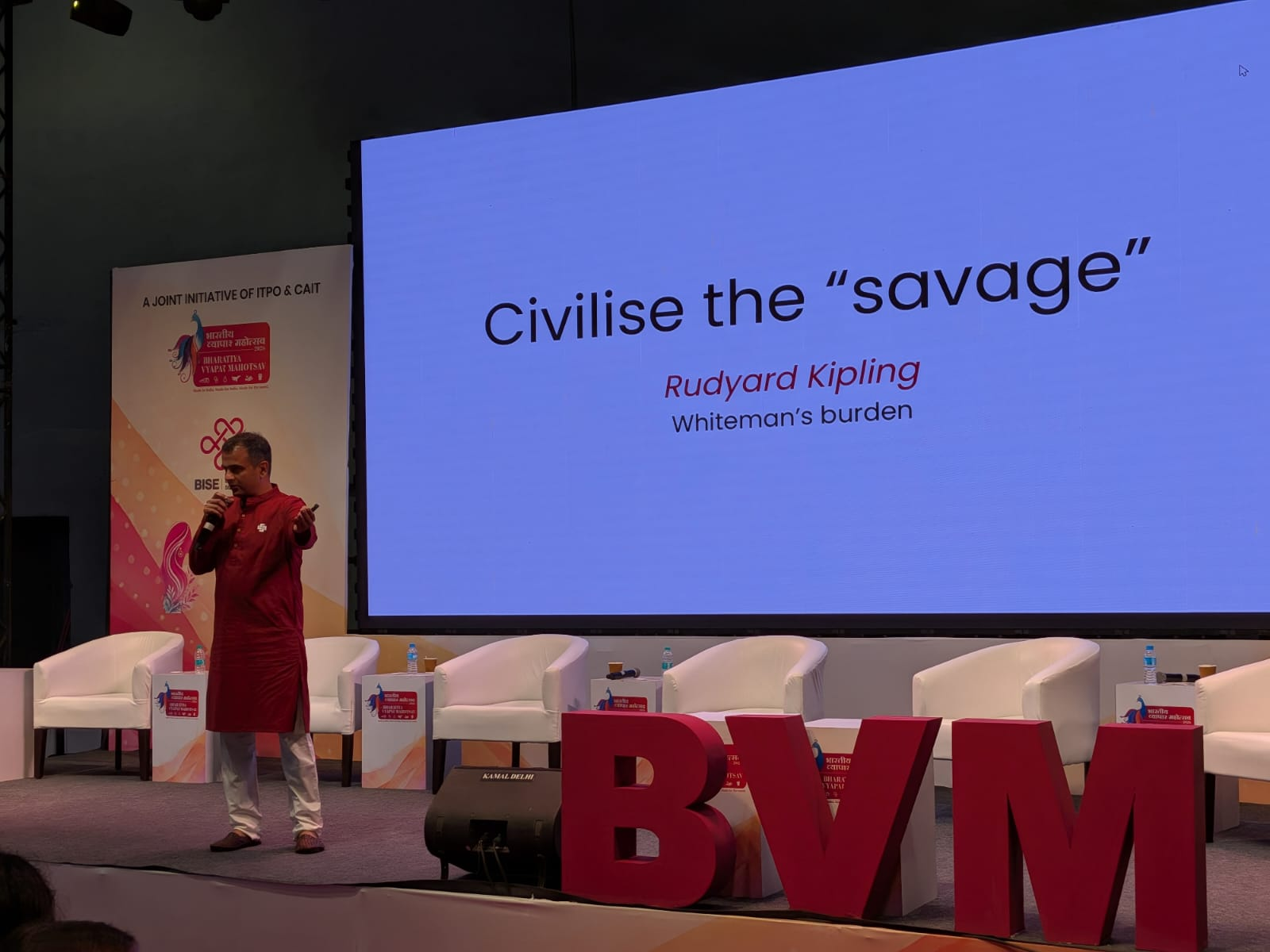
That mindset has a long history. Rudyard Kipling famously described the colonial idea of the “White Man’s Burden” in terms of civilising the “savage”. Today, we would never use such language. Yet a softer version of the same mindset can creep into technology: these people are unorganised; let us organise them.
I think that is exactly the wrong starting point for local commerce.
We should not organise the unorganised. We should empower them — on their own terms.
The interesting question, therefore, is not “How do we make the local shop more like an online business?”
It is: What are the terms on which local commerce already works?
The answer begins with something very simple.
Local commerce is a conversation, not merely a transaction.
Walk into a kirana shop in Jaipur and a customer might say, “Bhaiya, wahi wala atta dena.” The shopkeeper knows what “wahi wala” means. There may be no SKU, no product code and no perfectly structured order. There is context because there is a relationship.
A vegetable seller in Hyderabad may quote ₹60, hear the customer say ₹50, settle somewhere in between, throw in some coriander and close the deal. Bargaining is not a defect in the system. Bargaining is part of the system.
A customer may tell a shopkeeper, “Pichhli baar ke ₹40 adjust kar lena,” or simply settle everything at the end of the month. This informal credit — khata — is not an exception. Flexibility is woven into how local businesses operate.
Try to digitise all of this by forcing the merchant into a rigid workflow, and you have not digitised his business. You have asked him to build a new business.
That is why simple has to beat perfect.
For local commerce, simple is often more useful than accurate.
You do not need a bulldozer to kill a mosquito.
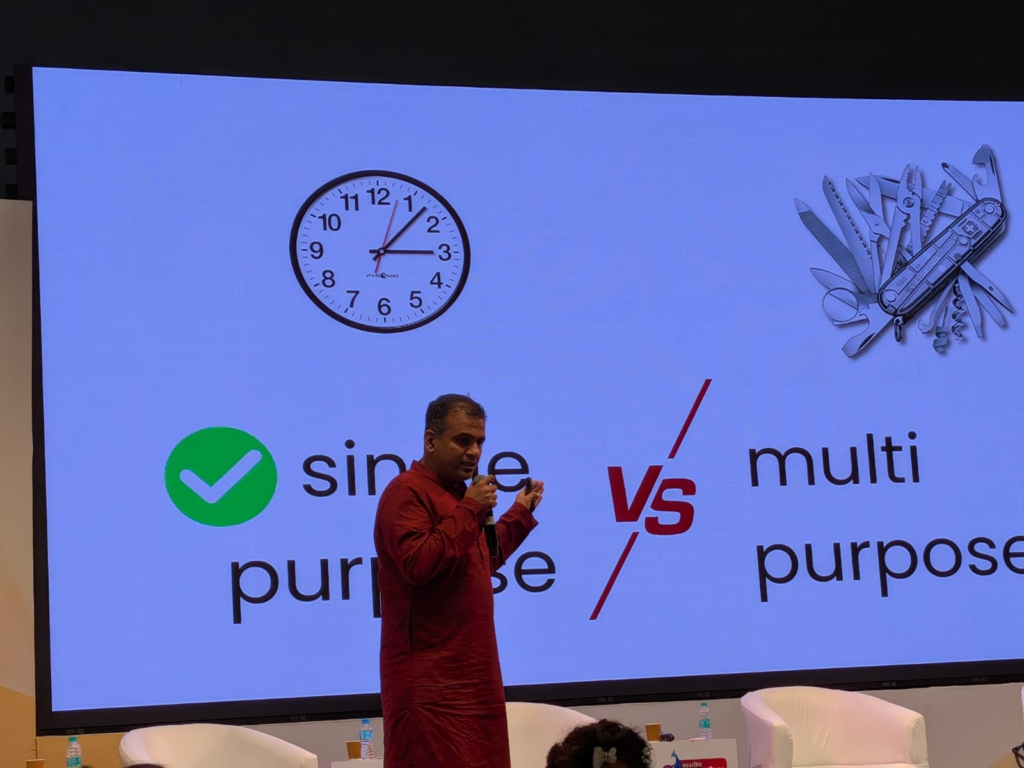
A shopkeeper may need one thing solved really well, not a giant piece of software that attempts to solve twenty things badly. We have a tendency in technology to celebrate deeply integrated, all-in-one products. But sometimes a single-purpose solution is much more powerful because it fits naturally into the existing system.
Think about UPI. Its power comes from making one thing extraordinarily easy: payments.
The same principle can apply to local commerce. Chotu does not need to become accounting software, inventory software, CRM software, logistics software and everything else. Its job can be much narrower: make ordering from a local shop incredibly simple.
There is a certain humility in that approach.
Local businesses already have a rhythm.
Catalog. Order. Bill. Pay.
That rhythm exists in a kirana store, a wholesaler, a distributor, a bakery and countless other local businesses. Technology should not unnecessarily alter that rhythm. It should make it easier.
But ease does not mean rigidity.
A shop in Bengaluru might receive a WhatsApp order. Another customer may call. Someone else may walk into the store. Another may send a photograph of a handwritten list. These things should be able to happen simultaneously.
Local commerce is inherently multimodal.
The customer does not think, “Today I am using the WhatsApp channel.” They think, “I need these ten things.”
The shopkeeper should be free to serve them however they arrive.
There is another term that technology companies frequently underestimate: language.
Local commerce is vernacular first.
A customer does not think in English product taxonomy.
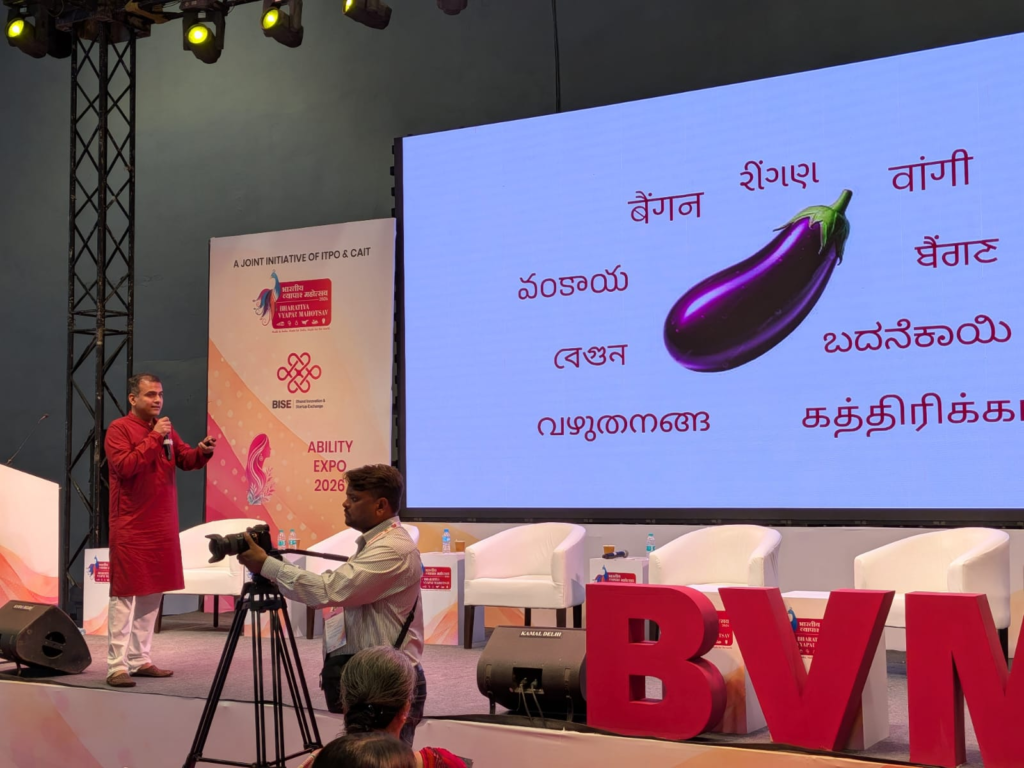
It is not “brinjal”, “eggplant” or “aubergine”.
It is vankaya in Telugu, baingan in Hindi, and whatever word that particular customer has always used. The same applies to products, quantities, relationships and even the way prices are discussed.
Language is not just translation.
It is familiarity.
And familiarity is one of the strongest forms of good product design.
That is why a digital product for local commerce should look like the people using it. It should speak like them. It should work the way they already work.
This also means that change cannot demand a complete transformation overnight.
A local shopkeeper should not have to abandon his existing behaviour and suddenly become a digital merchant.
Change has to be incremental.
Take a small general store in Kerala. Today, perhaps 80% of its business happens through walk-ins and phone calls. Tomorrow, a few customers may begin ordering on WhatsApp. The day after, more customers may discover the shop digitally. The technology should grow alongside the business.
The merchant should not have to cross a giant bridge before seeing any benefit.
In fact, value should arrive almost immediately.
One of the most absurd expectations we have placed on small merchants is that they should spend months creating a digital catalogue before they can start selling.
A local shopkeeper cannot spend six months preparing for digital commerce.
Give the shopkeeper a ready-made catalogue. Let the shop open in seconds. Let the first order happen today.
The first experience with technology should create value, not homework.
And throughout all of this, one principle must remain non-negotiable:
The shopkeeper should remain in full control.
Pricing should belong to the merchant.
The catalogue should belong to the merchant.
Ordering should belong to the merchant.
Delivery should belong to the merchant.
Customer relationships and customer data should belong to the merchant.
Even the identity of the shop should remain intact.
Walk through an Indian market and you will see decades of identity embedded in shop names: a family name, a local name, a neighbourhood reference. A shop such as Sai Manasa General Stores is not just a collection of products. It is a local institution with an identity.
Digitisation should amplify that identity, not replace it with somebody else’s brand.
This leads to a broader conclusion.
Perhaps the failure of local-commerce technology was never that Indian merchants were resistant to technology.
Perhaps we were asking them to become someone they were not.
We were trying to organise them when we should have been empowering them.
We were trying to make them accurate when we should have made them simple.
We were trying to standardise a business built on flexibility.
We were building for one digital channel when their customers live across many.
We were speaking the language of software when their world is vernacular.
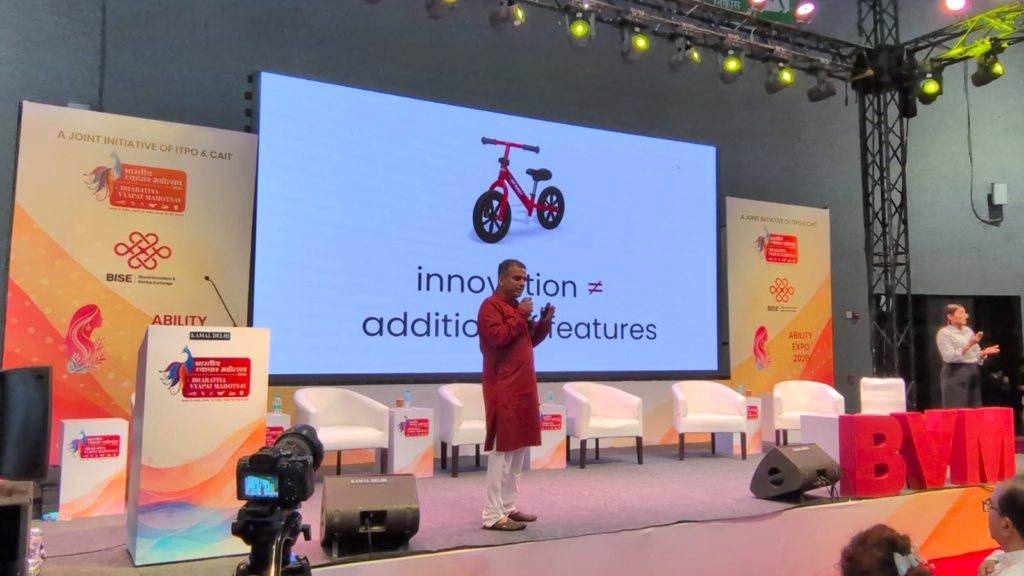
We were adding more features when the real innovation might require fewer.
And we were asking merchants to prepare for months before giving them value.
The opportunity is therefore not to turn the neighbourhood shop into an e-commerce company.
It is to make technology behave more like the neighbourhood shop.
That means conversation instead of rigid transactions.
Flexibility instead of fixed workflows.
Bargaining instead of artificial price rigidity.
Vernacular instead of translation-first design.
Multiple ways to order instead of one mandatory channel.
Incremental change instead of a paradigm shift.
Merchant control instead of platform control.
And, above all, immediate value instead of months of preparation.
The local shop does not need to be civilised.
It needs to be empowered.
And perhaps that is the insight that finally makes digitising local commerce investable.