
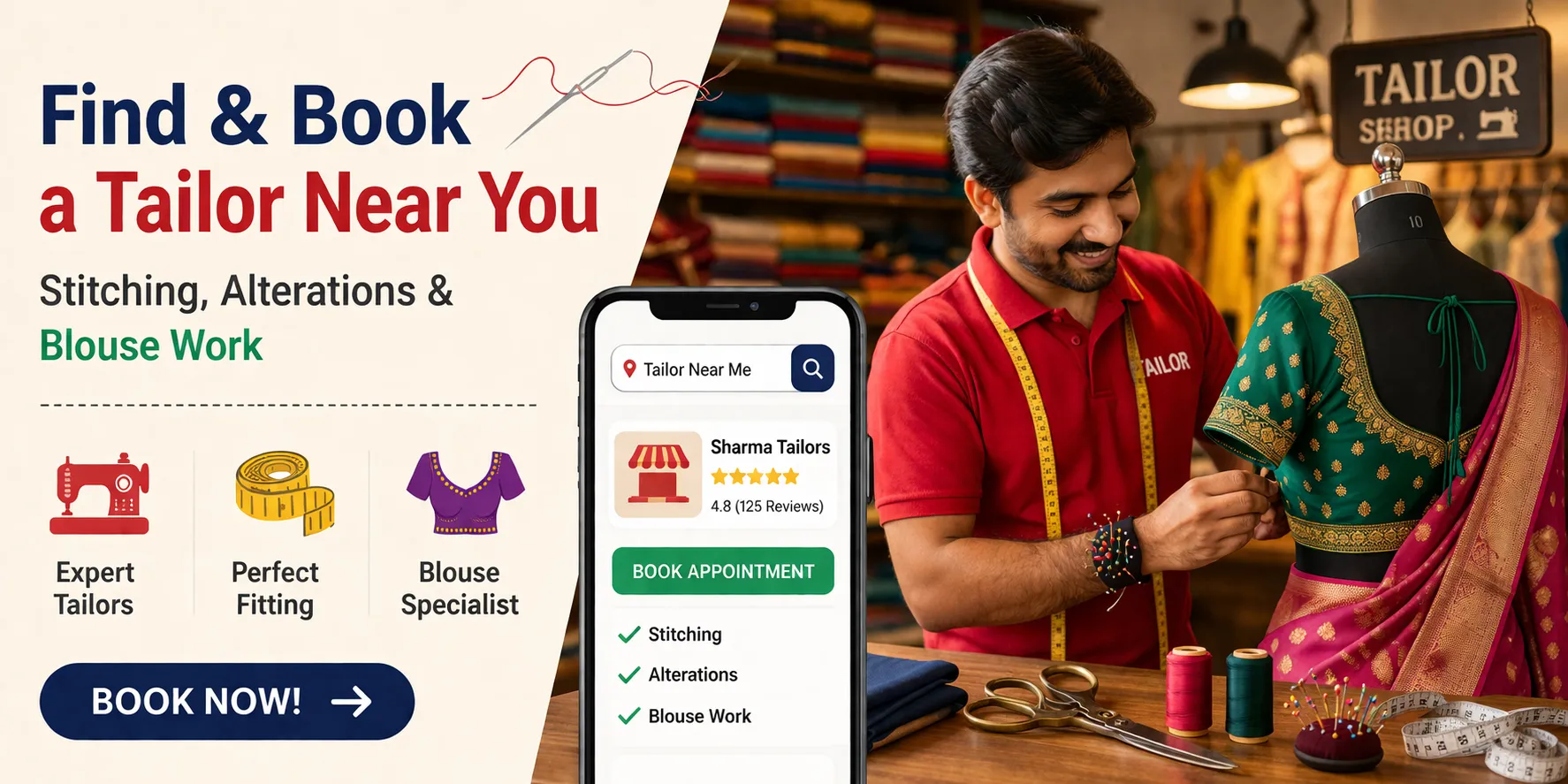
Online tailoring platforms promise convenience-but in reality, many of them feel impersonal, rigid, and platform-controlled. On the other hand, chotu works on a very different philosophy.
This article breaks down how chotu is fundamentally different from online tailors and why it works better for both customers and tailoring professionals.
1. Online Tailors Are Platforms. chotu Is a Discovery Layer.
Most online tailoring websites:
- Act as middlemen
- Standardize designs and processes
- Control pricing, timelines, and communication
With online tailors, you’re ordering from the platform.
chotu works differently.
On chotu:
- You discover real local tailors
- The tailor owns the relationship
- chotu does not interfere in pricing or stitching style
👉 chotu helps you find the tailor, not replace them.
2. Online Tailors Push Fixed Designs. chotu Supports Custom Work.
Online tailoring platforms usually offer:
- Limited design catalogs
- Fixed measurement formats
- Standardized stitching rules
This works for basics-but fails for:
- Body-specific fitting
- Traditional designs
- Alterations and custom requests
With chotu:
- You talk directly to the tailor
- Share reference photos or fabric details
- Get truly customized stitching, not template-based work
Tailoring stays personal-just like it should be.
3. Online Tailors Centralize Work. chotu Empowers Local Tailors.
Most online tailoring brands:
- Centralize stitching in factories
- Pay tailors per piece
- Reduce tailoring to gig work
chotu flips this model.
On chotu:
- Tailors work from their own homes or shops
- They set their own prices and timelines
- Local skills stay local
This means:
- Better craftsmanship
- Fair earnings
- Stronger neighborhood businesses
4. Online Tailors Depend on Logistics. chotu Depends on Local Trust.
Online tailoring platforms rely heavily on:
- Courier pickups and drop-offs
- Delays due to logistics
- Complicated return or alteration cycles
With chotu:
- The tailor is near you
- Measurements, trials, and alterations are easier
- Communication is faster and more human
Local proximity beats long-distance logistics every time.
5. Online Tailors Are Brand-First. chotu Is Tailor-First.
On online tailoring websites:
- The brand is the hero
- Tailors remain invisible
- Customers don’t know who stitched their clothes
On chotu:
- Tailors build their own digital identity
- Customers know exactly who they’re working with
- Reputation grows locally, not anonymously
chotu helps tailors be seen, not hidden.
6. Online Tailors Lock You In. chotu Keeps You Free.
Many online tailoring platforms:
- Push app-only workflows
- Limit communication
- Lock customers into their ecosystem
chotu keeps things simple:
- Discover → connect → decide
- No forced subscriptions
- No platform dependency
Both customers and tailors stay in control.
7. chotu Supports Online Tailoring Without Replacing Tailors
Importantly, chotu doesn’t oppose online tailoring.
In fact, many tailors on chotu:
- Offer online stitching classes
- Take orders via WhatsApp
- Serve customers beyond their immediate area
chotu simply gives them visibility and reach, without taking ownership away.
Final Thoughts
Online tailoring platforms focus on scale and standardization.
chotu focuses on people, skills, and local businesses.
If you want:
- Real customization
- Direct communication
- Local expertise
- Fair value for tailors
Then chotu is not an alternative to online tailors-it’s a better model altogether.
Tailoring doesn’t need to become faceless tech.
It just needs better discovery.