
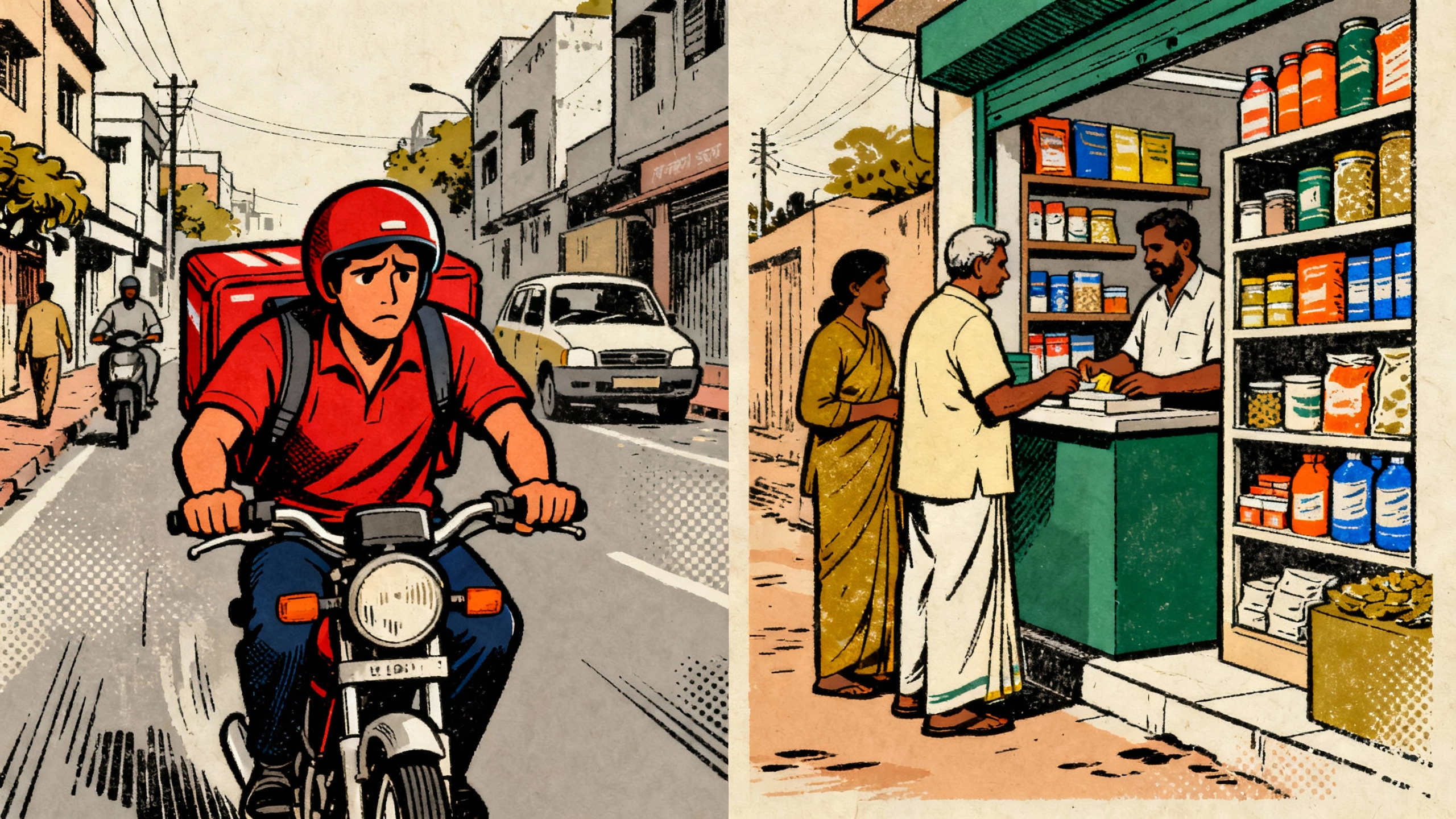
Across Indian cities in late 2025 and early 2026, scenes of protest have emerged from gig economy workers, especially riders in the quick commerce sector. The issue at the heart of these strikes isn’t just pay or perks – it’s about risk, unreasonable time pressure, and unfair operational expectations.
In particular, the promise of 10-minute delivery has become a flashpoint. Riders say that shrinking delivery windows – touted as a consumer convenience – are leading to unsafe conditions, erratic scheduling, and unpredictable earnings.
Understanding this debate matters – not just for gig workers and consumers, but also for the millions of local shops and everyday buyers across India.
Why Gig Workers Are Striking: The Reality Behind 10-Minute Delivery
Quick commerce platforms have grown rapidly in India by promising instant gratification: food, groceries, medicines, and essentials delivered in as little as 10 minutes.
But for delivery workers, this promise often translates into:
• Excessive delivery pressure
Trying to meet a 10-minute deadline on city streets filled with traffic and pedestrians is inherently unsafe.
• Longer unpaid waiting times
Riders frequently wait at hubs or for orders without pay, only to rush for deliveries.
• Lower actual hourly earnings
While claimed earnings look high on paper, real income can drop once waiting, cancellations, and penalties are factored in.
• Increased road risk and stress
Pressure to beat the clock can encourage risky riding behaviour and physical strain.
These conditions have pushed many gig workers to strike for safer work standards, fairer pay, and delivery expectations grounded in real city dynamics.
A Sharp Look at 10-Minute Delivery: Is It Good for India?
On the surface, fast delivery seems like a win for consumers – who doesn’t appreciate instant service? But when delivery time targets become unrealistic business mandates, both workers and customers can lose out.
Here are some concerns Indians are increasingly voicing:
1. Safety Over Speed
Riders under time pressure may compromise safety to meet delivery targets, risking accidents.
2. Hidden Costs for Shoppers
While delivery appears fast and cheap, the real cost may show up in surge pricing, hidden fees, or poor quality due to rushed fulfilment.
3. Profit Margins vs. Worker Welfare
The economics of extreme speed often benefits platforms more than those doing the actual work.
4. Community Impact
Quick commerce often sidelines nearby shopkeepers and local networks that already deliver essentials at a reasonable time frame.
These are the core reasons that have given rise to collective action by gig workers – not just in one city, but in multiple urban centres across India.
Local Shops: A Safer and More Sustainable Option for Indian Shopping
Amid this controversy, a quieter shift is taking place: many Indians are revisiting the value of local shopping networks.
Here’s why local shops continue to matter:
✔ Predictable service times
You don’t need to rush a delivery in 10 minutes for groceries or daily essentials – a same-day visit often suffices.
✔ Personal trust and relationships
Shopkeepers know their regular customers, preferences, and local neighbourhood flows.
✔ No unrealistic delivery pressure
Without arbitrary time windows, local trade works at a practical pace that supports both the seller and the buyer.
✔ Supports local economy
Every rupee spent with a nearby shop stays within the community longer.
How chotu Helps Local Shops Scale Business – Especially Now
In this environment, small and medium neighbourhood shops are finding ways to stay competitive without unsafe delivery swords hanging over them.
chotu helps local shops grow safely and sustainably by:
📌 1. Building Digital Presence Without Pressure
Instead of forcing quick delivery windows, chotu lets shop owners list products and services so that local customers discover what they need – at their own pace.
📌 2. Connecting Real Demand with Nearby Shops
When people search for essentials, recharge, or daily needs, chotu helps them find trusted local stores that can fulfil orders without frantic rush.
This means:
- Better planning
- Reasonable delivery or pick-up expectations
- Reduced stress for workers
📌 3. Empowering Shops to Compete – Not Complicate
Local businesses often struggle with technology because they are expected to adopt tools that resemble big platforms.
With chotu:
- There’s no forced algorithmic performance score
- Shops control their services
- Prices and products reflect local needs
- Offers and promotions make sense for community habits
📌 4. Helping Indian Consumers Shop Safer
When customers use chotu to find and buy from nearby stores, they benefit from:
- Transparent service expectations
- Familiar faces and trusted service
- No unrealistic time pressures
- Support for neighbourhood economies
In a world where gig strikes highlight how modern delivery models can go too far, chotu stands for a middle path – convenient local access without risking worker welfare or consumer frustration.
What This Means for Indian Consumers
Here’s the bottom line for everyday people:
Speed isn’t everything. Value, safety, trust, and predictability matter more.
While 10-minute delivery sounds attractive, the costs – human and economic – are becoming clearer. By supporting neighbours, visiting local stores, and using platforms like chotu to find nearby shops, Indians can balance convenience with community wellbeing.
Conclusion: Community First, Convenience Second – A More Indian Way
The gig workers’ strike isn’t just about pay or perks. It’s about how business models shape lives – for workers, consumers, and local communities.
The rise of instant delivery challenged traditional patterns. The backlash suggests a deep truth: Indians want convenience, but not at the cost of people’s safety or livelihoods.
Platforms like chotu show a safer, more grounded direction – one where:
- Local shops thrive
- Workers aren’t rushed by arbitrary clocks
- Communities control how and when they buy
This isn’t anti-tech. It’s pro-people.